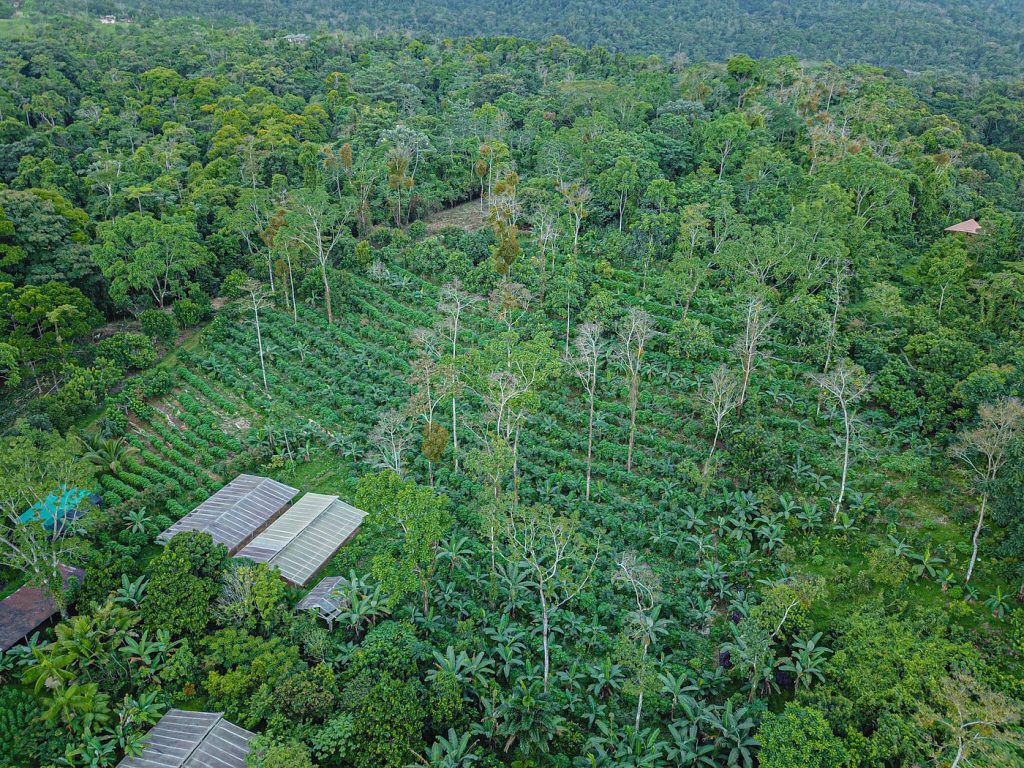
Syntropic Agriculture
Recently, I came across a farming approach called syntropic agriculture. I’d never heard of it before, but after spending some time learning about it, I found the concept fascinating.
Syntropic agriculture was developed in Brazil, Ernst Götsch and is based on the idea that agricultural systems should mimic the structure and processes of natural ecosystems. Rather than relying on monocultures, it integrates a diverse mix of crops, shrubs, and trees that grow together across different stages of ecological succession.
A key principle is that nature naturally moves towards greater complexity, biodiversity, and productivity. Instead of viewing plants as competitors, syntropic systems are designed so that species support one another over time. Fast growing pioneer species create conditions for longer lived species, while regular pruning generates biomass that is returned to the soil, improving fertility and ecosystem function.
The approach combines food production with ecological restoration. Healthy soils, increased biodiversity, carbon sequestration, and productive harvests are not seen as competing objectives, but as outcomes of the same process.
What I find particularly interesting is the underlying philosophy: rather than focusing solely on reducing environmental impacts, syntropic agriculture seeks to create conditions where human activity actively contributes to regeneration and increased ecosystem health.
What possibilities could this unlock? Can we increase agricultural yields while simultaneously improving soil health? Can we restore degraded landscapes, increase biodiversity, retain more water in the landscape, and transform barren or exhausted farmland into productive ecosystems?
Alongside related approaches such as permaculture, regenerative agriculture, and agroforestry, syntropic agriculture represents an exciting shift in how we think about land management. Whether these systems can be scaled more broadly remains to be seen, but the exchange of ideas and experimentation taking place today could play an important role in reshaping the future of agriculture, not just how we farm, but the philosophy behind why we farm the way we do.